Important Note
It is strongly advised that technicians have completed training and/or are familiar with the IICRC S500:2021 Standard for Professional Water Damage Restoration.
Flood Water!
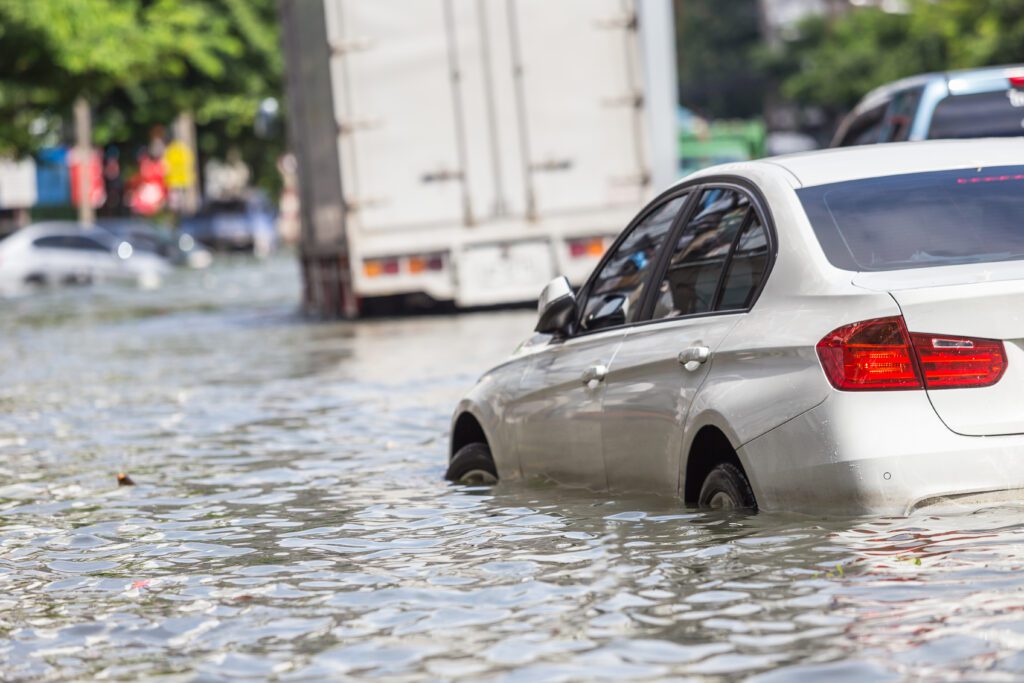
BEWARE OF FLOODWATER!
Floodwater should never be treated as normal rainwater. It is critically important to take extra precautions when cleaning up flood-affected properties to ensure that you don’t come into contact with contaminated water. When large volumes of water flood through an inhabited town, the water kills animals, collects rubbish and backs up sewer lines. The water that constitutes “flood water” commonly contains bio-hazards that can quickly make humans and animals very ill.
Flood Water is defined by three categories. Before embarking on a job, the category of floodwater must be known to ensure an applicable plan is created and executed.
Category 1 – water originating from a clean, sanitary source, such as a broken water supply pipe.
Category 2 – flood water containing significant contamination, such as a washing machine leak.
Category 3 – water that contains pathogens and toxic substances, including chemicals.
This includes sewage back-ups and flood water from storms, etc. Note that where flood water is left unattended or comes in contact with organics or chemicals, etc the category may elevate to the next level.
A well-created and executed plan by a qualified professional will include as a minimum;
- Appropriate safety measures and PPE for all technicians
- A detailed documentation of the project, including the category of flood water, ingress details, a damage profile and a list of assets affected.
- A well-structured containment, isolation and discard/removal plan must be executed to prevent adjoining area contamination and suppression of microorganism growth.
- Gross soiling and sanitisation will be required prior to substrate drying.
- Follow approved drying procedures specific to the substrate, taking into account absorption /porosity characteristics, substrate reaction to wetting, etc.
- Consideration may need to be taken for remediating mould growth and disinfection.
- Post-remediation evaluation and verification are required.
Process
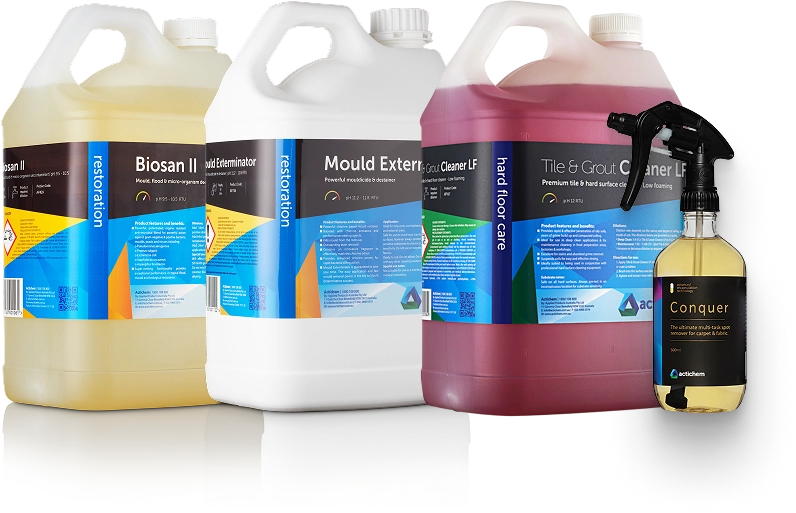
Biosan II, Thymox and Percide achieve their primary role of destroying pathogens with amazing efficiency (see respective product information sheets). Whilst they share a large overlap in application, each biocide has unique characteristics which enable the restoration technician to achieve reliable results, every time with enviable efficiency.
Deosan and Deozyme employ the innovative ElimoTech chemistry to eliminate malodors caused by all categories of flood waters. Deosan is further enhanced with a biocide blend to destroy odour-causing germs, whilst Deozyme relies on a powerful quad bio enzyme blend to digest rank organics.
Initial Wash Down
Flood disaster projects frequently require an initial wash down to remove organic loading, surface soiling and bulk mould growth. These wash downs require solutions with the muscle to remove gross soiling and a biocide for the protection of technicians from dangerous pathogens and to suppress pathogen count and mould growth.
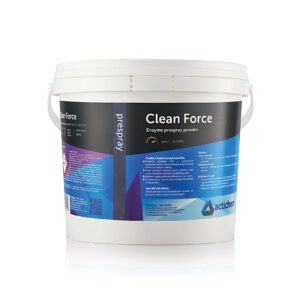
Ideal for soiling and grime removal:
- Enzyme boosted powdered detergent tackles severe organic loads and soiling
- Economical 1:64 (15ml/1Lt) to 1:100 (10ml/1Lt) dilution range
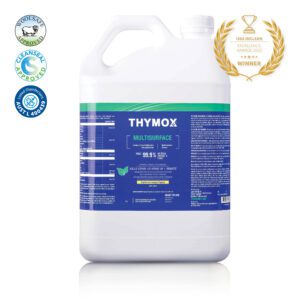
Ideal initial knock-down disinfectant:
- Completely non-hazardous, high-performance disinfection activity
- Safe on virtually all water cleanable surfaces

Often the product of choice where clean-up with pathogen control is required:
- Excellent cleaning performance, with enhanced wetting and emulsification.
- Economical in use with a 1:16 (60ml/1Lt) to 1:32 (30ml/Lt) dilution ratio.
- Disinfection technology is very resistant to dilution and deactivation from organic loading and soiling.
- Biosan II residues will not interfere with any follow-up application of Percide.
Pathogen Elimination
See the Mould Removal section in our Restoration Handbook for treatment of mould growth.
A complete kill of bacteria, viruses and mould is required for successful flood restoration and mould remediation. Thymox, Biosan II and Percide fulfil this function to perfection. Each has been tested to internationally recognised disinfectant micro-laboratory testing procedures under dirty conditions.
In most applications, any of these products can be used; however, a few points of note are;
- Biosan II microorganism kill requires a dwell time of 8 minutes and a dilution of 1:32.
- Percide microorganism kill is rapid, requiring only 60 seconds.
- Thymox, Biosan II and Percide are enhanced with super wetting agents for ultimate penetration of porous surfaces and organic load.
- Thymox, Biosan II, and Percide residues are not toxic and can be safely left on most surfaces.
- Thymox is a botanical, natural and eco-label option and completely non-hazardous.
Discolouration & Stain Removal
Mould growth and organic soiling create unsightly and stubborn staining. Percide has the inherent ability to oxidise and remove the toughest of mould and organic staining. Percide can be further boosted with Percide Boost which dramatically enhances it’s destaining action. It is ideal for stain removal following an initial wash down.

Percide has several excellent benefits for this role.
- Outstanding destaining action against mould and organic discolouration.
- Provides powerful biocidal and mouldicidal action in this, often final, clean.
Odour Neutralisation
See also the Actichem Odour Control / Elimotech section in our Restoration Handbook.
The key to odour neutralisation is to remove the odour source. The action of the Biosan II and Percide would normally achieve this during the flood restoration process. However, further odour control is often required to absorb air-borne and trapped malodour molecules and to provide a fresh replacement scent.

Deozyme has been specifically formulated with:
- Powerful quad-bioenzyme chemistry to digest severe, hard-to-reach and/or embedded organics
- Elimotech odour absorption technology, which eliminates malodours at a molecular level
- Fresh, floral scent replaces malodours in the client’s olfactory system.

Deosan has been specifically formulated with:
- Powerful quad-microbial activity, which does not conflict with Biosan II or Percide residues
- Elimotech odour absorption technology, which eliminates malodours at a molecular level
- Fresh, floral scent replaces malodours in the client’s olfactory system.
Further Notes
-
Application Techniques
- Sprayer (pump, electric or hydroforce) – Thymox, Biosan II, Percide, Deozyme, and Deosan are all suited for sprayer application. Percide is not suited for hydroforce use unless used with Percide Fog Boost. Thymox, Biosan and Deosan are suited for use through cold/wet foggers.
- Manual Application – Thymox, Biosan II, Percide, Deozyme and Deosan are suited for manual application by means of a sponge or cloth. Biosan II Wet Wipes are ideal for smooth surfaces.
-
Note on surface types
Thymox, Biosan, Percide, Deozyme and Deosan are safe for use on most water cleanable surfaces when used as directed. However, please note the following points;
- Carpet and fabrics – Biosan II, Percide and Deosan will negatively affect the stain block treatment of 5th Generation nylon carpet. Percide contains hydrogen peroxide and pretesting must be done on suspect fibres or fabrics to prevent colour loss. The addition of Percide Boost will increase the possibility of colour loss on suspect fibres. If concerne,d dilute Percide 1:1 with water or use Biosan II or Thymox.
- Natural Stone – Thymox, Biosan II, Deozyme and Deosan are safe to use on and around all types of natural stone. Percide is mildly acidic and can dull shiny marble, limestone, travertine and granite. If natural stone is encountered, mix Percide with Percide Boost – this mix is completely safe for use on fine stones.
- Floor boards and lacquered wood – Thymox, Biosan II, Percide, Deozyme and Deosan are safe for use on floorboards, coated wooden flooring and lacquered wooden furniture. However, pretesting is still advised as some coatings can be destabilised by flood or mould contamination.
- Structural timber and steel – Thymox, Biosan II, Percide, Deozyme and Deosan are safe for use on and around structural timber and steel.
- Plasterboard and painted surfaces – Thymox, Biosan II, Percide, Deozyme and Deosan are safe for use on all plasterboard and painted surfaces which are deemed to be water-cleanable.