Approaching soot removal with a professionally formulated plan will eliminate unwanted headaches and the risk of turning smoke deposits into permanent stains.
What is a “Wet Edge”
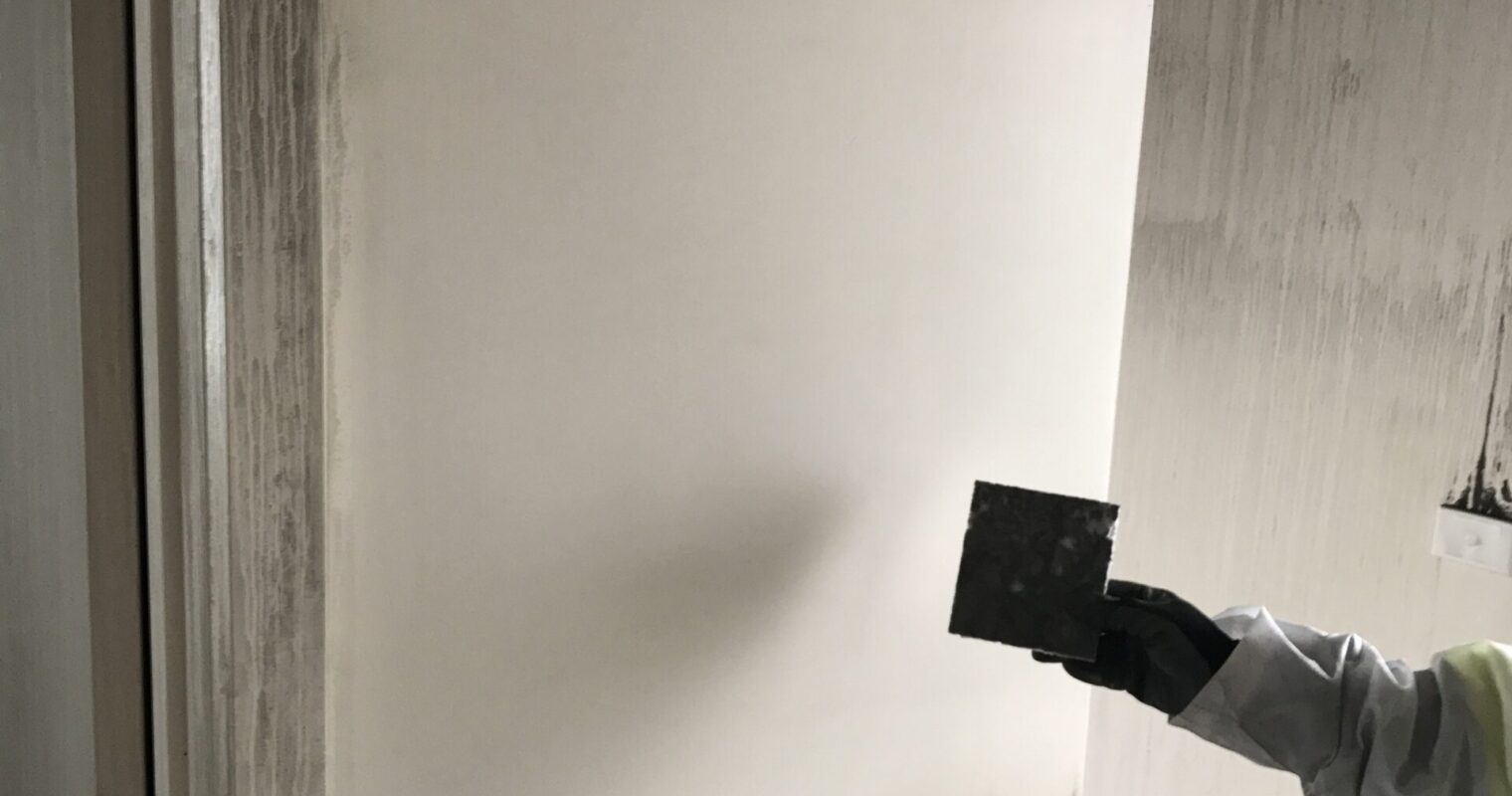
When removing soot using the wet cleaning method from smooth or textured surfaces using Fire Restore or Fire Fix, it is imperative that you always maintain a wet edge.
A wet edge is the edge of the cleaning operation where uncleaned and clean meet. If cleaning has to stop for some reason, do not rinse right up to the edge, but leave a 100mm edge unrinsed. When cleaning resumes, this will clean in contrast to leaving a start/stop line, which can be very difficult to remove.
Preparation for soot removal
When preparing for the removal of soot from walls and hard floors, there are a couple of points to consider.
- Scope out the area to be treated and ensure all areas are safe and structurally sound. Remove items and unsalvageable materials.
- Low-pressure spray Deostor Fire to suppress smoke odours while work proceeds.
- Set up any required containment systems and protection material for items not being cleaned in this process.
- Using a HEPA vacuum and/or System 7 Pad, remove as much loose smoke soiling as possible. For natural fibres, this should remove the majority of soiling.
Equipment

The System 7 pads are an extreme advancement on the traditional fire sponges/soot sponges. The System 7 pad combines perfectly with both the Actichem Fire Fix and Fire Restore to produce a brilliant fire restoration cleaning solution. The benefits of using System 7 for fire restoration are very extensive, but some of the significant benefits include the fact that the pads can be rinsed out and reused again and again.
Many disaster restoration experts find that when using the System 7 Pad and Fire Restore combination, they have completely eliminated the requirement to re-paint some walls.
To remove soot from walls and hard floors, you will need:
- Fire Restore – designed to cut through the tough oily soils created by fire activity and the resultant smoke and soot.
- System 7 Pad – an innovative and effective hard surface cleaning pad with dirt pulling impact and huge capacity. Many disaster restoration experts find that when using the System 7 pad and Fire Restore combination, they have completely eliminated the requirement to re-paint some walls.
- Vacuum equipment – HEPA Vacuum.
- PPE including eye protection and gloves.
Ensure that you have read and understood the safety data sheet and technical information for all chemical products used. This includes a thorough understanding of directions for use and the limitations and capabilities of each product.
Important Note
All methods and procedures should be according to the IICRC Fire and Smoke Restoration Technician Course and BSR/IICRC 700 series.
The Process
-
Pre-Treatment Note
If mechanical removal (eg. Soda blasting) has been recommended for some surfaces, perform this process now.
-
Re-vacuum affect surfaces
Re-vacuum all surfaces in the containment area using a HEPA vacuum.
-
Prepare Solution to be used
Fire Restore – Add 100mL per litre of water (1:9).
Optional – Add Oxyboost Plus – 20g per litre of above solution for additional smoke stain removal and odour elimination.
Optional – Add Deostor – 10-20mL per litre of above solution for additional odour control. For natural fire types (wood, paper) and minor soiling, dilutions of 25-50mL per litre can be used. -
Apply Solution
Apply the solution to limited areas at a time. Apply using a sprayer, mop or System 7 Pad.
-
Dwell
Allow a minimum of 10 minutes dwell time.
-
Agitate and wash area
For smooth surfaces use a System 7 Pad. As the Pad becomes heavily soiled, rinse in clean water or Fire Restore solution. For textured or rough surfaces use a medium stiff brush.
-
Rinse
Rinse well with clean water. Always maintain a “wet edge.” (See notes above)
Further Notes
-
Previous surface damage
Please note these treatment directions assume that the host surface is not damaged by the fire.
-
Pre-treatment Note
The instructions provided below are not designed to be comprehensive but are provided with a focus on the chemical use component of a fire and smoke restoration project. It is assumed that the remediation professional undertaking the project is competent in fire and smoke restoration processes and in the use of containment systems, air scrubbers, HEPA vacuuming, fogging equipment and in the science of building structures.
-
PPE Requirements
On all projects big and small, be sure to wear all recommended personal protective equipment. Ensure that you have read and understood the safety data sheet and technical information for all chemical products used. This includes a thorough understanding of directions for use and the limitations and capabilities of each product.
Where To Buy
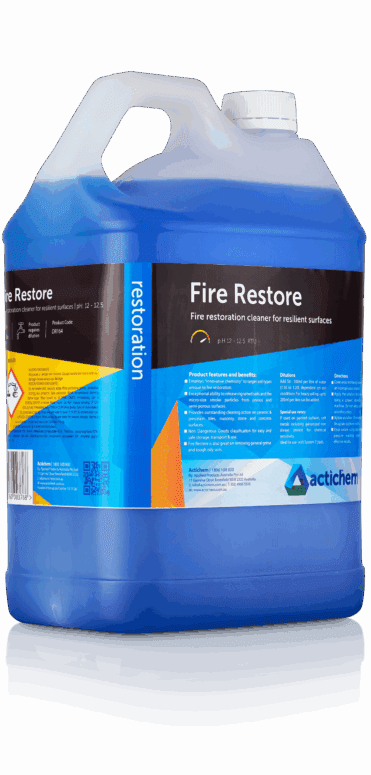
Fire Restore
Fire restoration cleaner for hard resilient surfaces
Fire restoration cleaner for hard resilient surfaces
Find a Stockist