Removing mould from synthetic fabric upholstery is known to be challenging due to the delicate nature of many synthetic fibres and their susceptibility to damage.
Mould doesn’t just sit on the surface; it can penetrate deep into the fibres, where it produces enzymes and acids that break down both the fabric and its dyes. This chemical reaction can lead to significant discoloration, fading, or uneven staining, especially in areas where the mould has been left untreated for too long.
Moreover, some synthetic fabrics are dyed with low-fastness or unstable dyes, which are more likely to react negatively when exposed to mould or cleaning agents. These dyes can lose their vibrancy or bleed into surrounding areas, resulting in further damage to the fabric’s appearance.
Due to these challenges, it’s crucial to use the right mould removal products and techniques that effectively eliminate the mould without compromising the upholstery’s colour, texture, or overall condition. A careful, methodical approach is needed to preserve the integrity of the fabric and restore it to its original state.
Equipment
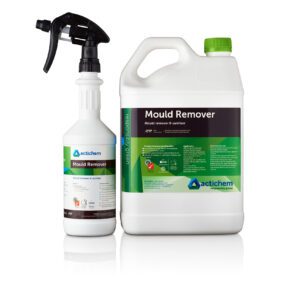
Actichem Responsibly Green Mould Remover is the ideal product for removing mould from synthetic fabric upholstery due to its powerful yet gentle formula. It effectively eliminates mould and mildew without damaging fibres or causing colours to bleed. Its fast-acting solution tackles mould at the source, preventing further growth or spread.
Environmentally friendly and non-flammable, Mould Remover offers a safe and reliable option for synthetic upholstery and restoring the fabric’s appearence while preserving its integrity and colour.
To remove mould on synthetic fabric upholstery, you will need:
- The Actichem RG615 Mould Remover. Always pretest in a small, inconspicuous location to check for fabric chemical sensitivity.
- Wet Extraction Machine – Larger mould infestations should be treated using a wet extraction machine. This will minimise the risk of regrowth and ensure an effective solution.
- Upholstery Brush – When agitating the upholstery, don’t use the brushing motion as it will damage the fabric. The best method is to tamp or firmly roll the brush over the mould.
- PPE – All the necessary PPE needs to be use when working
with chemicals.
Ensure that you have read and understood the safety data sheet and technical information for all chemical products used. This includes a thorough understanding of directions for use and the limitations and capabilities of each product.
Important Note
All methods and procedures should be according to the IICRC S300-2000 Standard And Reference Guide For Professional Upholstery Cleaning. Including requirements for PPE, personnel safety, containment systems and documentation requirements.
The Process
-
Pretest the Mould Remover & Process
Before beginning, always pretest Actichem RG615 Mould Remover in a small, inconspicuous area of the fabric. This ensures that the upholstery’s fibres and dyes are not sensitive to the product. Testing also helps identify any hidden damage that may be exposed during the cleaning process.
-
Apply Actichem RG615 Mould Remover
Once the pretest is complete, apply Actichem RG615 Mould Remover directly to the affected area. Use a light application, as over applying the solution can lead to excess moisture, which may affect the fabric. The key is to saturate the mouldy area evenly, allowing the solution to work effectively without soaking the fabric.
-
Agitate with an Upholstery Brush
Using a soft upholstery brush, gently agitate the area to help the Mould Remover penetrate the fibres. This action loosens the mould and mildew, making it easier to clean. Be careful not to apply too much pressure, as delicate fabrics can be easily damaged.
-
Allow 10-15 Minutes Dwell Time
Let the solution dwell for 10-15 minutes to fully break down the mould and mildew. This allows the product to deeply penetrate the fabric, tackling the stains and contamination effectively. Avoid letting the solution dry completely during this time.
-
Extract Rinse Using Wet Extraction Equipment
After the dwell time, use wet extraction equipment to thoroughly rinse and remove the Mould Remover solution from the fabric. This step is crucial in removing not only the mould but also any excess product, ensuring the upholstery is clean and free of residue. Use additional vacuum-only strokes to help dry the area as much as possible, preventing over-wetting and reducing drying time.
-
Repeat Steps 1 to 4 if Required
If the mould stain or discoloration persists after the first treatment, repeat Steps 1 to 4. For stubborn or deep-set mould, multiple applications may be necessary to fully remove the contamination. Ensure that each application is followed by adequate agitation and dwell time to achieve the best results.
-
Apply a Light Solution of Actichem RG615 Mould Remover
For any remaining moisture or staining, apply a light solution of Actichem RG615 Mould Remover and blot with a clean, dry, white absorbent towel. Allow the upholstery to air dry completely to ensure no excess moisture is left in the fabric.
Further Notes
-
Suitable for Synthetic & Nylon Upholstery
This cleaning process is ideal for synthetic and nylon upholstery, as well as synthetic rugs and fabrics. It’s gentle enough to prevent damage while effectively removing mould and mildew.
-
Substitute with Percide
If Actichem RG615 Mould Remover is unavailable, you can substitute it with Percide, diluted 1:1 with water. Follow the same steps for mould removal, as Percide provides similar cleaning power without compromising fabric integrity.
-
Avoid Over-wetting Fabric
Throughout the cleaning process, avoid over-wetting the fabric to prevent excess moisture from soaking into the upholstery. Excess moisture can lead to prolonged drying times and potential mould re-growth, so always aim to use minimal moisture while ensuring thorough cleaning.
Where To Buy
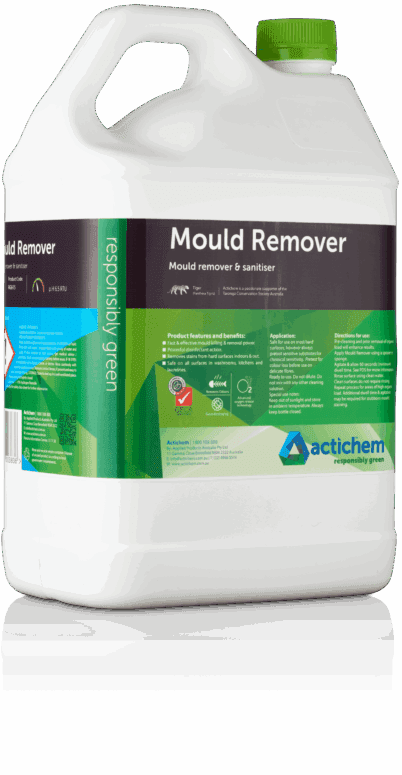
Mould Remover
Oxygen powered mould & microorganism disinfectant
Oxygen powered mould & microorganism disinfectant
Find a Stockist