Mould on mattresses is a common problem. However, mattresses are a delicate substrate that needs to be cleaned with much caution.
It doesn’t take a lot to discolor or damage the fibers. That is why we recommend staying away from bleaches and other home remedies as often they haven’t been tested on these fabrics. Rather use a professionally formulated product designed for these delicate substrates.

What Causes Mould on Mattresses?
Understanding the causes of mould growth on mattresses is crucial for effective removal and prevention. Mould thrives in damp, dark environments and feeds on organic materials.
Mattresses, often made from natural fibres and padding, provide an ideal habitat. Common sources of moisture that can lead to mould growth include spills, high humidity, body fluids and sweat. Identifying and addressing these causes can help prevent mould from recurring.
Preparation: Safety First
Understanding the causes of mould growth on mattresses is crucial for effective removal and prevention. Mould thrives in damp, dark environments and feeds on organic materials.
Mattresses, often made from natural fibres and padding, provide an ideal habitat. Common sources of moisture that can lead to mould growth include spills, high humidity, and sweating during sleep. Identifying and addressing these causes can help prevent mould from recurring.
Products to Remove Mould from Mattresses
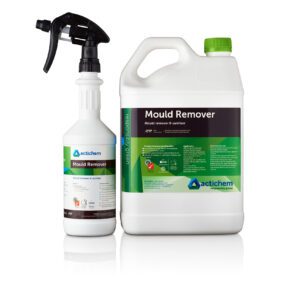
Mould Remover
The Actichem RG615 Mould Remover is the product of choice for mattress cleaning, disinfection, mould removal and stain removal. It is a GECA certified, hydrogen peroxide powered mould killer that is safe for use on almost all surfaces. For natural fibers, like wool & silk, pretest in an inconspicuous place. Ready To Use.
Equipment

To remove mould from mattresses, you will need:
- The Actichem RG615 Mould Remover. Always pretest in a small, inconspicuous location to check for fabric chemical sensitivity.
- Upholstery scrubbing brush. A toothbrush is handy for detailing.
- Wet extraction equipment (or wet & dry vacuum)
- PPE including eye protection and gloves.
Ensure that you have read and understood the safety data sheet and technical information for all chemical products used, This includes a thorough understanding of directions for use and the limitations and capabilities of each product.
The Process
-
Apply Solution
Spray apply the RG615 Mould Remover to the affected area. You will see the Mould Remover begin to fizz where there is mould. This is the peroxide reacting with the organic mould matter. It is an excellent visual aid to indicate where mould is present, as mould isn’t always visible to the eye.
-
Agitiate
Agitate the affected area with the scrubbing brush. This will ensure the solution penetrates into the surface. Although some areas are unable to be reached, where possible agitation will make a big difference. Use back and forth scrubbing motion only, not circular as this may damage the fabric. Do not apply excessive pressure.
-
Dwell Time
Leave the Mould Remover to dwell for at least 10 minutes. Dwell time is very important to ensure the best result is achieved. It will allow the solution to fully penetrate and eradicate the mould spores.
-
Extract & Ventilate
Extract the solution with a wet & dry vacuum cleaner. Extraction ensures the solution and mould is thoroughly removed from the substrate. Open windows and doors to ensure good air circulation, which helps to reduce mould spores in the air and speed up the drying process.
-
Prevention
Once substrate is free of solution, allow to dry. Then apply a light spray of the Mould Remover to act as a preventative measure to ensure regrowth of the mould spores is minimised.
Further Notes
-
Alternative Product
If the RG615 Mould Remover is unavailable, use Percide diluted 1:1 with water (500ml Percide and 500ml water)
-
Pre-treatment process
Scope out the area to be treated. Remove items that may be damaged by the process and set-up any protective sheeting to protect adjoining and surrounding surfaces (e.g., carpets, benchtops, furniture, etc). Shut down mechanical ventilation systems including air-conditioning systems. Thoroughly HEPA vacuum the area to be treated where possible.
-
Previous surface damage
Please note these treatment directions assume that the host surface is not damaged by the mould.
-
Washing Equipment
Clean all washing equipment used in a fresh solution of RG615 Mould Remover and rinse in clean water.
-
Severe Mould Infestations
Note that some mould infestations may penetrate below the mattress’s outer fabric. These conditions cannot be remedied, and the mattress will need to be discarded.
Where To Buy
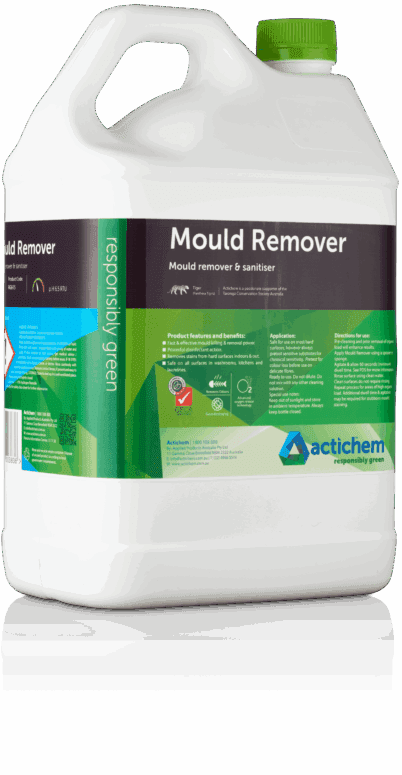
Mould Remover
Oxygen powered mould & microorganism disinfectant
Oxygen powered mould & microorganism disinfectant
Find a Stockist