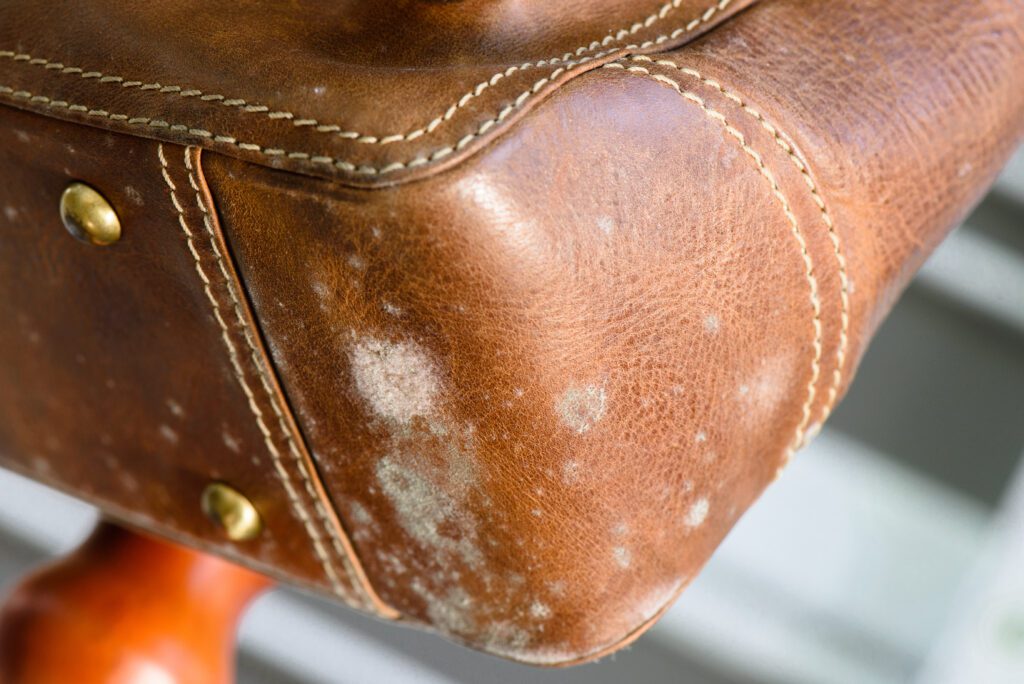
Mould on leather is particularly challenging to remove because leather, as a natural material, can serve as a food source for mould.
The porous nature of leather allows mould to penetrate deeply, making it difficult to eliminate entirely without risking further damage to the material. Additionally, the enzymes and acids produced by mould can break down the leather’s fibers, leaving behind stains, discoloration, and structural weakness.
Even after successful mould removal, the process can expose or highlight pre-existing damage caused by the mould, such as cracks, pitting, or fading, which may not be reversible.
Managing you clients expectations
It’s important to manage client expectations when dealing with mould on leather. While every effort will be made to restore the leather, complete restoration may not be possible if the material has been significantly compromised.
It’s essential to explain that while the mould can be removed, the underlying damage may be visible, and the leather’s original condition may not be fully restored. This helps ensure the client understands the limitations and outcome of the cleaning process.
Equipment
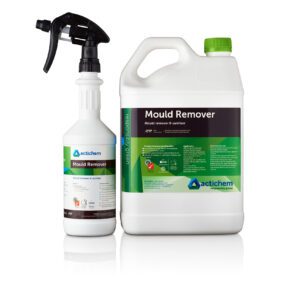
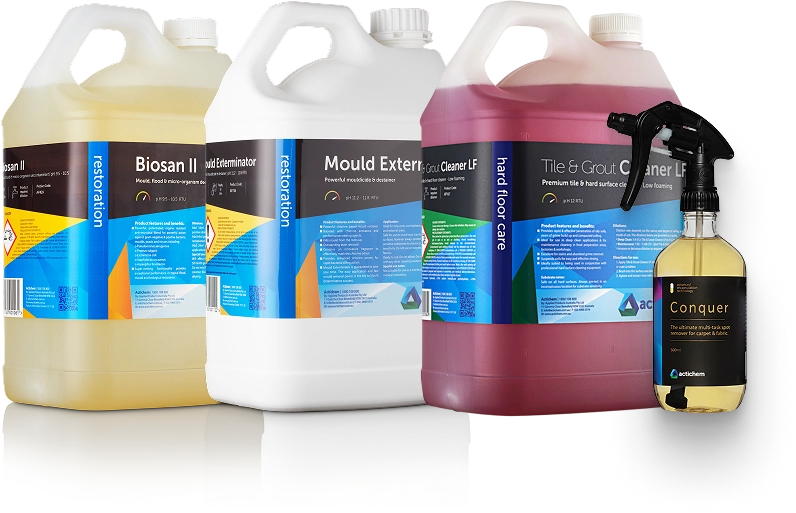
Mould Remover is extremely effective in removing mould from leather, due to its powerful yet safe formulation. While mould can be particularly challenging to remove from delicate materials like leather, Mould Remover is designed to quickly and effectively kill mould and mildew, breaking down the spores and stains without causing further damage.
Its fast-acting cleaning and sanitising power ensures that the mould is eliminated at the source, leaving surfaces clean and germ-free. This is crucial when working with leather, as it prevents the mould from re-growing while minimising the risk of damage. Additionally, Mould Remover is environmentally friendly and non-flammable, provings a safe option for both the user and the material being treated.
To remove mould from leather, you will need:
- The Actichem RG615 Mould Remover. Always pretest in a small, inconspicuous location to check for fabric chemical sensitivity.
- White terry towel – By using a white towel, no other
pigment will bleed onto the leather. - Soft Brush – When agitating the leather, do not apply too
much pressure to ensure you don’t damage the leather. - PPE – All the necessary PPE needs to be use when working
with chemicals.
Ensure that you have read and understood the safety data sheet and technical information for all chemical products used. This includes a thorough understanding of directions for use and the limitations and capabilities of each product.
Important Note
All methods and procedures should be according to the IICRC S300-2000 Standard And Reference Guide For Professional Upholstery Cleaning. Including requirements for PPE, personnel safety, containment systems and documentation requirements.
The Process
-
Pretest the RG615 Mould Remover
Before beginning the mould removal process, it is crucial to pretest the chemical and process on a small, inconspicuous area of the leather. This test will help you assess any potential reactions, such as discolouration or sensitivity to the chemicals. Keep in mind that mould may have caused hidden damage to the leather, which could become more apparent during the cleaning process. Always proceed with caution, especially on delicate or high-value leather items.
-
Apply Actichem RG615 Mould Remover
Dampen a soft, clean cloth with the Mould Remover solution and gently blot the stained area. This ensures that the leather is adequately pre-wetted with the solution, allowing the active ingredients to start breaking down the mould and mildew.
-
Agitate the Stained Area
Using the dampened cloth or a soft brush, agitate the mould-affected area thoroughly. Gently work the product into the leather fibers, being careful not to scrub aggressively, which could damage the leather. The agitation helps to lift the mould and stains from the leather while allowing the Mould Remover to penetrate and treat the contamination.
-
Allow Dwell Time
Allow the Mould Remover to dwell on the stained area for 10-15 minutes. This dwell time is essential for the product to effectively break down the mould, mildew, and stains. Avoid letting the solution dry out during this time, as this can affect its cleaning efficacy. If needed, lightly mist with water to keep the area moist and enhance product performance.
-
Wipe Away Residue
After the dwell time has passed, use a clean, dry absorbent cloth to gently wipe away the Mould Remover and any loosened mould or stains. Blot the area to absorb the solution and contaminants without rubbing, which could potentially damage the leather’s surface.
-
Repeat if Necessary
If the stain or mould remains after the first treatment, repeat Steps 1 through 4. For stubborn stains or deep mould penetration, multiple applications may be required to achieve a thorough clean. Always allow the product to dwell long enough to work effectively, but ensure the leather does not become overly saturated.
Further Notes
-
Alternative Products
If Actichem RG615 Mould Remover is unavailable or if you prefer an alternative, Percide can be used in place of RG615 Mould Remover. Dilute it at a 1:1 ratio with water, and follow the same process for mould removal.
-
Managing Leather Sensitivity
Be mindful that leather is a natural material and may be sensitive to certain chemicals. Always test any products in an inconspicuous area before proceeding, as the cleaning process may reveal hidden damage caused by mould or previous cleaning attempts.
-
Protect the Leather Post-Cleaning
After removing the mould, consider applying a leather conditioner to restore moisture and flexibility, especially if the leather appears dried out. This helps maintain the leather’s quality and appearance, particularly after it has been treated for mould or mildew.
Where To Buy
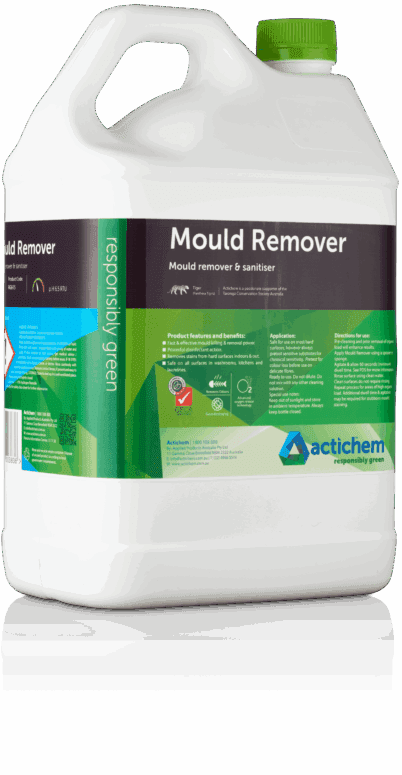
Mould Remover
Oxygen powered mould & microorganism disinfectant
Oxygen powered mould & microorganism disinfectant
Find a Stockist