Viscose – a viscous orange-brown solution obtained by treating cellulose with sodium hydroxide and carbon disulphide, used as the basis of manufacturing rayon fibre and transparent cellulose film.
Structure
It is made from reformed or regenerated cellulose (wood pulp and cotton linters) treated with various chemicals, which results in a shiny, silk-looking fiber.
Rayon is technically another version of Viscose, but very similar. The names are often used interchangeably.
It’s Presentation
- Often referred to as artificial silk or faux silk
- “Bamboo” fiber is often actually viscose
- Often has a shiny appearance
Characteristics
The Pros
- Very soft, excellent hand
- Excellent insulator – warm in winter, cool in summer
- Antistatic
- Easily dyeable – facilitates strong, bold colouring
- Light – lighter than cotton
- Very, very absorbent
- Non-allergenic, hygienic
The Cons
- Very susceptible to cellulosic browning
- Dye bleeding and colour loss/fading
- Fibre shedding–very weak fibres. It will break after 70 bends.
- Stiffening and wrinkling
- Weak when wet –loses 50% of it’s strength when wet
- Dyes are alkaline-based –extended acid or strong acid contact can destabilise the dyes
- Poor shading and poor fibre crushing recovery
- Very, very absorbent
- Non-allergenic, hygienic
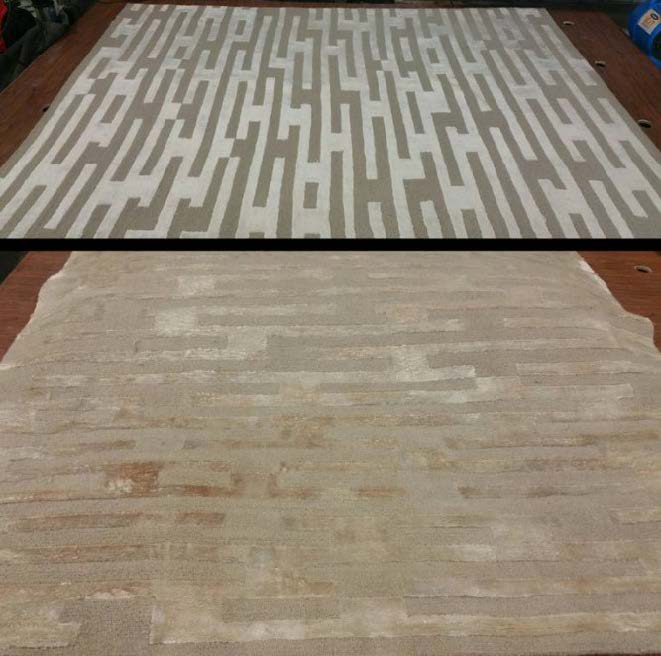
Cleaning Viscose (& Rayon)
Upfront Discussion & Pre-Test
- The challenges and risks associated with cleaning viscose must be discussed with the client.
- The weaknesses of viscose itself must be discussed to ensure the client has realistic expectations.
- Do not make promises of success.
- Have a standard “viscose/rayon” indemnity form.
- Pre-test for dye run. If the dye is suspect, you’re better off leaving it.
Pre-Test & Pre-Examine
- Burn Test –if not 100% sure –odour will be like burning paper. (Silk burn odour is like burning hair)
- Dye Test – conduct a dye run test
- Check for dye runs and colour loss (fading) – compare colour density across the back and front of rugs
- Check for loose and damaged fibres which could release during cleaning
Important Notes
- Fibre Care – fibres are brittle and can be loose.
- Do not use a brush or beater bar vacuum.
- Ensure your is free of sharp edges or hooks which could catch & pull fibres
- Do not beat or use stiff-brush brooms
- Weak when wet – loses up to 50% strength when wet
- Use cleaning tools very gently when wet
- Do not hang to dry –rugs & fabrics will stretch
- Structural –avoid stretching and wrinkling
- Do not hang to dry. Lay flat, face down. (Face down prevents any potential wicking from coming to the surface)
- Fibres matt during the cleaning process. Gently “comb” when drying to align fibres.
- Browning –the fibres are cellulose-based
- Use only mildly acidic cleaning agents
- Dry as soon as possible. Speed dry.
Notes On Cleaning
-
Low Moisture Method – Super Dry
Encap Fine Fabric (dilute 1:4)
Whip up a dense foam. Apply this foam to the viscose using a soft brush or sponge. Agitate and blot dry and align fibers. -
Low Moisture Method – Standard
Encap Fine Fabric (dilute 1:16)
Spray apply. Gently agitate the viscose with a soft brush. Dry extract, align fibers and facilitate fast drying. -
Drying
A very fine mist of an acid rinse or diluted fabric softener can be used to assist with grooming the viscose when drying.
Notes On Spotting
-
Oils, grease, ink, etc – use a volatile dry solvent
Actichem VDS
-
Colour stains & beverages –use 3% Hydrogen Peroxide.
Conquer O2 (dilute 1:1 with water)
Spotaway U (dilute 1:1 with water)
-
General Stains
Conquer (dilute 1:1 with water)
Pet & Flood (dilute 1:10 with water) for urine odour